Tag Archive for: #AmericanHistory

MBTAAnalysis: A look inside the MBTA
0 Comments
/
The MBTA shuttles over a million passengers a day around Greater…
https://pioneerinstitute.org/wp-content/uploads/CloseupClock-1.jpg
739
1244
Mary Connaughton
https://pioneerinstitute.org/wp-content/uploads/logo_440x96.png
Mary Connaughton2017-02-20 12:34:192017-02-21 09:47:58The Clock is Ticking…….
MA Teacher Kelley Brown on Founding Documents, U.S. History, & Civics
In this week’s episode of The Learning Curve, co-hosts Center for Strong Public Schools’ Alisha Searcy and American Federation for Children’s Walter Blanks interview Kelley Brown, an award-winning civics and government teacher at Easthampton High School and former Massachusetts Teacher of the Year. Ms. Brown discusses her background as an educator, her work with the “We the People": The Citizen and the Constitution program, and how it helps students engage with America’s Founding Documents, U.S. history, and enduring civic ideals.

U-Ark’s Randall Woods on John Quincy Adams: Statesman of the Early Republic
In this week’s episode of The Learning Curve, co-hosts U-Arkansas Prof. Albert Cheng and Center for Public Schools’ Alisha Searcy interview Randall Woods, John A. Cooper Distinguished Professor of History at the University of Arkansas, and author of John Quincy Adams: A Man for the Whole People. Prof. Woods shares the life and career of American statesman John Quincy Adams, the “first son of the Republic,” whose upbringing in the household of John and Abigail Adams shaped his lifelong devotion to public service.

BU Law’s Keith Hylton on Intellectual Property, Patents, & the Law
This week on The Learning Curve, co-hosts U-Arkansas Prof. Albert Cheng and Ret. MN Supreme Court Justice Barry Anderson interview Prof. Keith Hylton, William Fairfield Warren Distinguished Professor and Professor of Law at Boston University. Prof. Hylton shares insights from his academic career and the book Laws of Creation: Property Rights in the World of Ideas, which he co-authored. The discussion explores how Enlightenment thinkers like John Locke and Adam Smith helped shape the legal framework for property rights and the free market in the U.S., and how these ideas are central to understanding our modern economy.

Pepperdine Law’s Pulitzer Winner Edward Larson on 100th Anniv. of Scopes Monkey Trial
This week on The Learning Curve, co-hosts U-Arkansas Prof. Albert Cheng and Ret. MN Supreme Court Justice Barry Anderson interview Pulitzer Prize-winning historian and Pepperdine Law’s, Prof. Edward Larson. Prof. Larson marks the 100th anniversary of the Scopes “Monkey Trial,” a landmark case in America’s long-running debate over science, religion, and public education.

Brandeis Uni.’s John Burt on Robert Penn Warren & All the King’s Men
In this week’s episode of The Learning Curve, co-hosts Alisha Searcy and U-Arkansas Prof. Albert Cheng interview John Burt, the Paul Prosswimmer Professor of American Literature at Brandeis University. Prof. Burt offers rich insight into the life and work of one of the 20th century’s greatest American writers, Robert Penn Warren. Raised in rural southwestern Kentucky, Warren was deeply shaped by the legacy of the Civil War, which he explored in his influential 1961 work, The Legacy of the Civil War, and throughout his poetry and fiction.

Amanda McMullen on the New Bedford Whaling Museum
In this week’s episode of The Learning Curve, co-hosts U-Arkansas Prof. Albert Cheng and Alisha Searcy interview Amanda McMullen, President & CEO of the New Bedford Whaling Museum (NBWM). Ms. McMullen explores NBWM’s remarkable mission, collections, and economic impact on the Southcoast of Massachusetts. She discusses NBWM’s historical roots in the 19th-century Yankee whaling industry that made New Bedford the wealthiest city in the world per capita.

Director/Actor Samuel Lee Fudge on Marcus Garvey & Pan-Africanism
https://dts.podtrac.com/redirect.mp3/media.blubrry.com/3809857/api.spreaker.com/download/episode/64587551/thelearningcurve_samuelleefudge.mp3
In…

Cornell’s Margaret Washington on Sojourner Truth, Abolitionism, & Women’s Rights
In this week’s episode of The Learning Curve, co-hosts U-Arkansas Prof. Albert Cheng and Alisha Searcy interview Margaret Washington, the esteemed historian and author of Sojourner Truth’s America. Prof. Washington delves into Truth’s remarkable life, from her early years in slavery in New York to her transformation into a powerful abolitionist, women’s rights advocate, and religiously driven reformer. She explores Northern slavery, the Second Great Awakening, her famous “Ain’t I a Woman?” speech, and her Civil War-era activism. Prof. Washington also reflects on Truth’s enduring legacy as a symbol of justice, equality, and resilience in American history. In closing, Prof. Washington reads a passage from her book, Sojourner Truth’s America.

Harvard’s Leo Damrosch on Alexis de Tocqueville & Democracy in America
This week on The Learning Curve, co-hosts Alisha Searcy of DFER and U-Arkansas Prof. Albert Cheng interview Leo Damrosch, the Ernest Bernbaum Professor of Literature Emeritus at Harvard University and author of "Tocqueville’s Discovery of America". Prof. Damrosch delves into Alexis de Tocqueville’s historic nine-month journey through the United States in 1831–1832, which inspired his masterpiece, "Democracy in America".

U-TX at SA’s Catherine Clinton on Harriet Tubman & the Underground Railroad
This week on The Learning Curve, co-hosts Alisha Searcy of DFER and Dr. Jocelyn Chadwick interview Catherine Clinton, Denman Professor of American History at the University of Texas at San Antonio, and author of Harriet Tubman: The Road to Freedom. Prof. Clinton discusses her definitive biography of Harriet Tubman, the renowned abolitionist and Underground Railroad conductor.

Edward Achorn on Abraham Lincoln, the Civil War, & Slavery
This week on The Learning Curve, co-hosts Charlie Chieppo and Ret. MN Justice Barry Anderson interview Edward Achorn, a noted writer, historian, and author of "Every Drop of Blood: The Momentous Second Inauguration of Abraham Lincoln" and "The Lincoln Miracle: Inside the Republican Convention That Changed History". Achorn shares insights into Lincoln's improbable political rise and the critical events leading to his 1860 Republican presidential nomination, including his strategic maneuvering following his defeat in the 1858 Illinois Senate race.

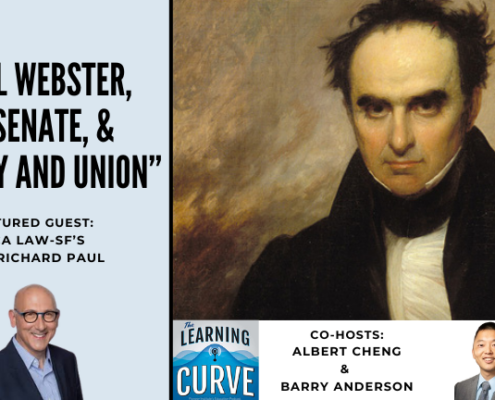
Prof. Joel Richard Paul on Daniel Webster, U.S. Senate, & “Liberty and Union”
Prof. Joel Richard Paul discusses the statesman Daniel Webster, highlighting his reputation as the "conscience of New England" and one of America's greatest orators. Prof. Paul shares that Webster, despite a modest upbringing, became a leading attorney whose arguments in landmark U.S. Supreme Court cases shaped constitutional law.

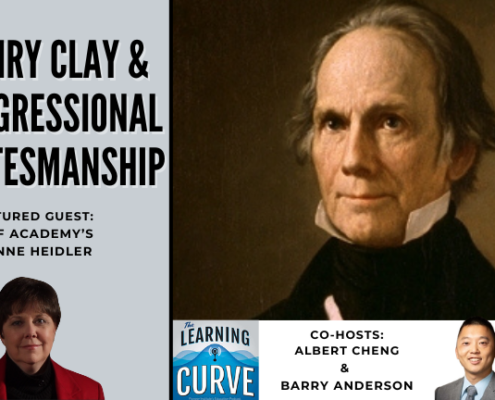
USAF Academy’s Jeanne Heidler on Henry Clay & Congressional Statesmanship
Dr. Heidler discusses Henry Clay's legacy as a seminal figure in American history. She covers Clay's early life, his transformation from a Virginia farm boy to a leading statesman, and his being mentored in the law by Founding Father, George Wythe.

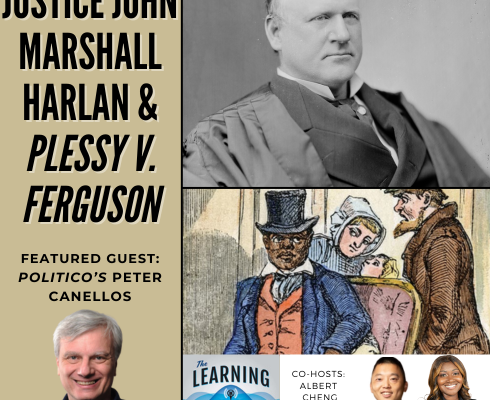
POLITICO’s Peter Canellos on Justice John Marshall Harlan & Plessy v. Ferguson
Mr. Canellos delves into Harlan's upbringing in a prominent slaveholding family, his Civil War service in the Union Army, and his rapid rise in Kentucky politics as a Republican. He highlights John Harlan’s mixed-race half-brother Robert Harlan and key legal precedents like the notorious Dred Scott v. Sandford (1857), which influenced Harlan's views on race and equality.

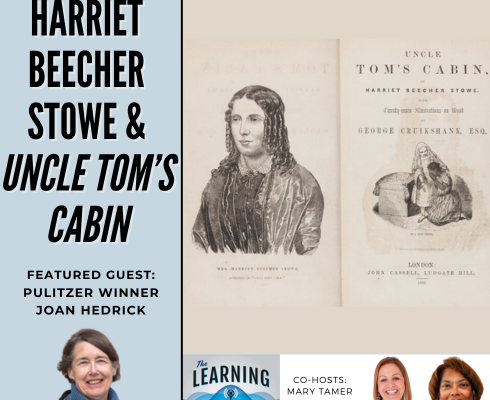
Pulitzer Winner Joan Hedrick on Harriet Beecher Stowe & Uncle Tom’s Cabin
Prof. Hedrick discusses Harriet Beecher Stowe's wide literary influence on U.S. history. From her abolitionist activism to the publication of international bestseller Uncle Tom's Cabin, they explore Stowe's New England upbringing, anti-slavery convictions, and lasting impact on American literature and social reform in the 19th century.

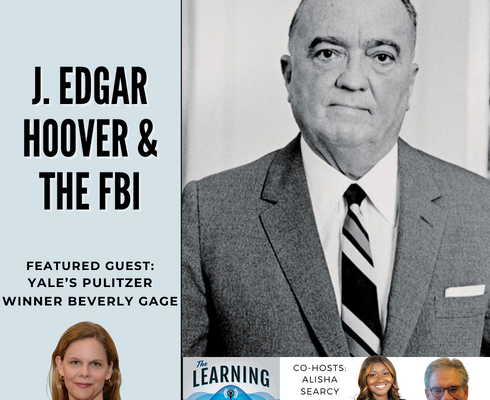
Yale University Pulitzer Winner Beverly Gage on J. Edgar Hoover & the FBI
Yale Prof. Beverly Gage, author of "G-Man: J. Edgar Hoover and the Making of the American," delves into the enigmatic life and career of J. Edgar Hoover, tracing his formative years in Washington, D.C., his rise to prominence as director of the FBI, and his enduring influence on American law enforcement and politics.