




November 19, 2026
New IRS Data: Massachusetts Lost $3.64 Billion in Income to Other States and Abroad in 2024

High earners and young residents continue to drive the losses, Florida and New Hampshire remain the top destinations, and the immigration that once offset the outflow has fallen sharply.
IRS migration data released last week shows Massachusetts lost a net $3.64 billion in adjusted gross income (AGI) to other states and abroad in 2024. While that is down 13 percent from the $4.18 billion lost in 2023, the 2024 loss was still two and a half times what it was in 2019 and nearly four times the 2012 loss. Since 2020, the state has lost a total of $18.54 billion in AGI.
On net 18,758 tax filers and 31,384 individuals left the Commonwealth between 2023 and 2024. Massachusetts ranked fourth in the nation for net AGI out-migration, behind only California, New York, and Illinois. It also ranked fourth in 2023.
The new data cover the second full year since the 4 percent surtax on incomes over $1 million took effect. The latest figures suggest the outflow of high earners remains far above pre-2020 levels: filers earning $200,000 or more took a net $2.32 billion with them in 2024, nearly five times the $484 million in 2019.
Key findings
- Who is leaving: Filers earning $200,000 or more accounted for 64 percent of the net lost income and filers aged 26 to 34 made up 43 percent of the net loss of filers.
- Lost Income: The average departing filer reported $114,800 in AGI, the highest of any state and 29 percent above the national average. Massachusetts also ranked first in 2023 ($118,100) and has ranked in the top seven every year since 2012. Departing filers out-earned arriving ones by $19,200 in 2024 ($26,500 in 2023), among the widest gaps of any state.
- Top destinations: Florida and New Hampshire accounted for 59 percent of net AGI losses, receiving $1.29 billion and $869 million, respectively. Their combined share was about two-thirds in 2023.
- Revenue implications: Applying the state’s 5 percent income tax rate to the $3.64 billion net AGI loss yields $182 million a year in forgone state income tax revenue. Applying the same math to the $18.5 billion in income lost from 2020 through 2024 yields $927 million a year in foregone state income tax revenue. These estimates of foregone tax revenue do not include calculations related to the 4 percent surtax.
- High earners are not being replaced: Massachusetts gained just 66 filers earning $200,000 or more for every 100 who left, compared with 64 in 2023 and 84 in 2019.
- Immigration is no longer a buffer: Net international migration to Massachusetts, which long offset these losses, fell to 40,240 in 2025, more than 35,000 below the year before. Nationally, the Census Bureau projects that net international migration will be nearly 90 percent below its 2024 level by mid-2026.
“The IRS data releases have in recent years repeated the same story in Massachusetts: We are bleeding taxpayers and wealth to states where it costs less to own a business, live and work,” said Jim Stergios, executive director of Pioneer Institute. “For a long time, immigration covered up those losses. That cushion is gone. The continued loss of young talent and established wealth is a serious threat to the state’s ability to create jobs and future prosperity.”
Where the income went
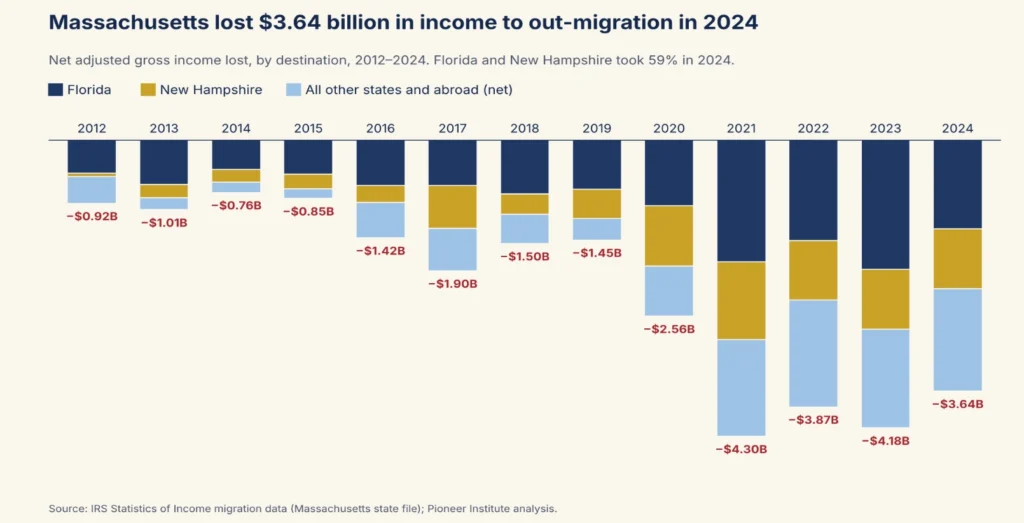
Figure 1: Net income lost by destination, 2012–2024
Florida and New Hampshire, which have no income or estate taxes, remain the top destinations. Massachusetts lost a net $1.29 billion to Florida and $869 million to New Hampshire in 2024, together 59 percent of the total, compared with about two-thirds in 2023. After those two, the largest net losses went to Maine ($221 million), North Carolina ($187 million), and Rhode Island ($183 million).
At the county level, Rockingham County, New Hampshire, drew the most income from Massachusetts in 2024: $386 million, more than double its 2019 total. Filers leaving for Palm Beach and Collier counties in Florida reported average incomes of $407,000 and $581,000. With fewer, lower-earning filers moving the other way, the two counties took $599 million on net, about $1.2 million per net filer.
Who is leaving
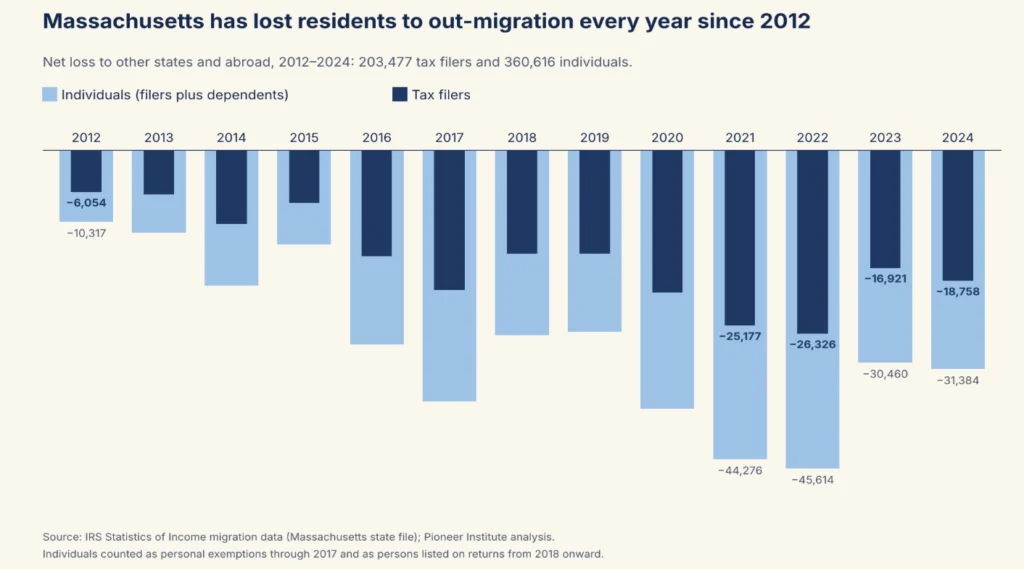
Figure 2: Net tax filers and individuals lost, 2012–2024
Young professionals and older high earners account for most of the loss, and the state is not replacing them:
- Filers aged 26 to 34 made up the largest share of the net loss. In 2024, 44 percent of that group’s net loss earned $100,000 or more, up from about a quarter in 2019.
- Filers 55 and older earning $200,000 or more took $1.47 billion in 2024, 40 percent of all income lost (44 percent in 2023).
- Net out-migration of filers was lower in 2023 and 2024 than in 2021 and 2022, but not because fewer people left. Departures held steady; nearly all the improvement came from more filers moving in, most of them earning under $100,000.
- Those arrivals have not replaced the state’s high earners. Massachusetts gained only 66 filers earning $200,000 or more for every 100 who left in 2024, little changed from 64 in 2023 and down from 84 in 2019.
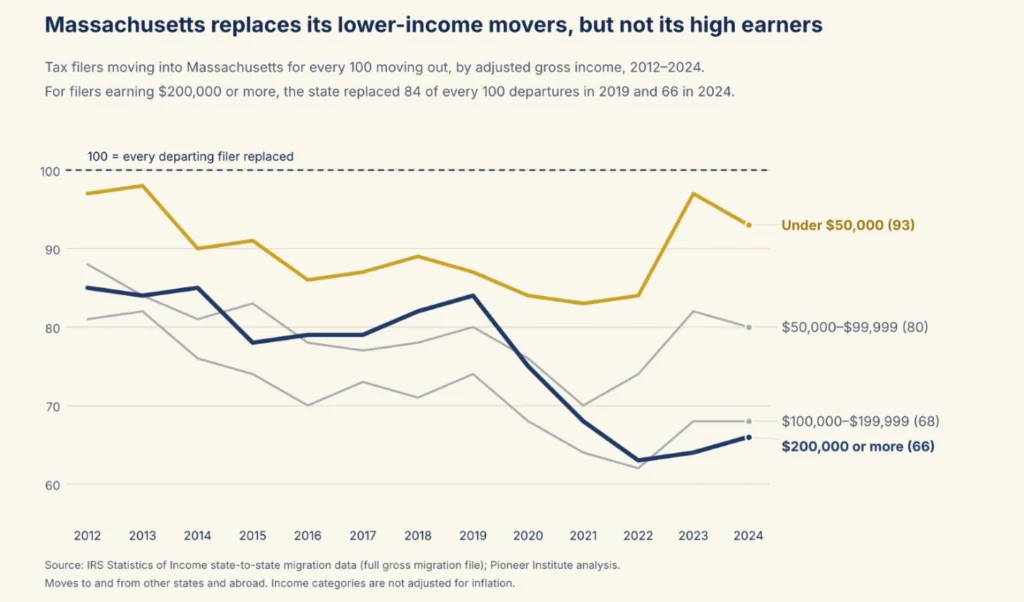
Figure 3: Filers moving in for every 100 moving out, by income, 2012–2024
Immigration can no longer cover the losses
For more than a decade, immigration masked the loss of residents to other states. That cushion is going away:
- According to Census Bureau population estimates, net international migration to Massachusetts fell to 40,240 in 2025, more than 35,000 below the year before, while the state lost a net 33,340 domestic residents to other states.
- Nationally, net international migration fell by more than half, and the Census Bureau projects a further drop in 2026.
- With low natural increase and an aging population, continued out-migration points to a stagnant or declining population, a shrinking labor force, and a narrower tax base.
What it means
Keeping people here will require lowering the cost of living and doing business; more housing; a more competitive tax structure, including the estate tax; and reliable transportation. As the Tax Foundation notes, taxes may not be the primary reason for a move, but they are often one of several factors people weigh. With filers 55 and older accounting for so much of the income lost, the estate tax deserves particular attention.
Pioneer’s analysis of IRS migration data is available at massirsdatadiscovery.com.
Data note: IRS migration data track households through their federal tax returns. Totals in this release come from the IRS Massachusetts-specific file; age and income detail come from the full state-to-state file, which counts filers slightly differently.