

Home Policy Priorities Education

Public School Choice

Promoting innovative public school options that empower parents and lift young lives. 

About Public School Choice

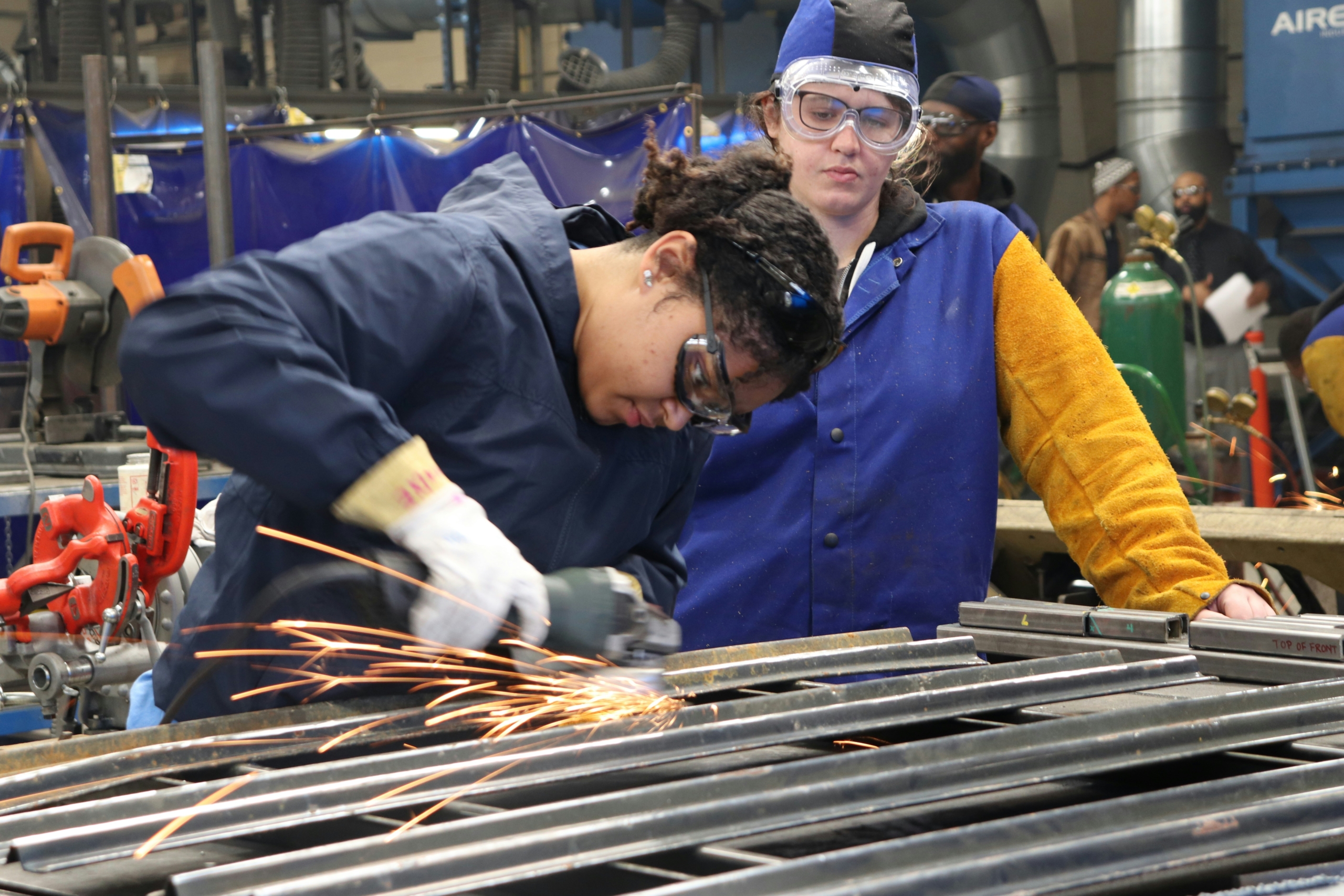
Not every public school student flourishes in a one-size-fits-all system. Public school choice matters because it allows educators and families to step outside traditional district structures and find programs that better fit students’ needs. In Massachusetts—where Pioneer cut its teeth—public school choice includes charter schools, vocational-technical schools, virtual schools, and interdistrict choice programs. 

Pioneer champions opportunities for all students to thrive. Our leadership in launching and strengthening charter schools, and decades of work expanding and improving vocational-technical and interdistrict choice programs, reflect a core belief: parents make the best choices for their children, and engaged families drive achievement. 

Today, charter schools serve 3.5 million students nationwide (7% of U.S. K–12 enrollment), with thousands on waitlists in Massachusetts. Students in vocational programming varies by state—and in Massachusetts they serve 55,000 students (or 17% of high schoolers), with thousands more on waitlists. In Massachusetts, interdistrict programs educate 20,000 students, and programs such as the Metropolitan Education Corporation (METCO) program also have thousands of students on waitlists. 

Pioneer’s public choice work seeks out innovation and best practices, sharing Massachusetts’ successes and learning from successful programs around the country. 

June 17, 2025

Study Recommends Easing Barriers to Innovative Learning Models

Despite Massachusetts families’ strong interest in alternative to traditional educational models, entrepreneurs seeking to establish innovative learning environments face significant challenges, according to a new study published by Pioneer Institute.
May 15, 2025

Pioneer Institute Releases Toolkit to Transform Boston’s Madison Park Technical Vocational High School

Pioneer Institute has released a new Urban Voc-Tech Toolkit  aimed at helping Boston’s Madison Park Technical Vocational High School reach its full potential as a driver of opportunity for high-need students. Drawing on the successes of vocational-technical schools in Worcester, Springfield, and across Massachusetts, the toolkit outlines strategies based on high academic standards, strong industry partnerships, and increased school autonomy. The toolkit was coauthored by a group of five nationally recognized education leaders.
April 29, 2025

Pioneer Institute Releases 2025 Toolkit to Guide Policymakers on Education Tax-Credit Scholarship Programs

New report urges maximizing tax-credit value to expand educational opportunity and boost private contributions
October 24, 2024

Mountain State Modifications: Tiffany Uses ESA Flexibility to Pivot Quickly For Her Son’s Education

This week on Homeschooling Journeys, we meet Tiffany Hoben from West Virginia. Curious Mike chatted with her twice: once in June 2024, and again in October 2024.  This October episode shows the nature of homeschooling: plans change.  That cuts both good and bad.  One cool opportunity disappeared; but at roughly the same time, a new need emerged, as well as the perfect educator to solve that problem.  Tiffany, like other homeschoolers using Education Savings Accounts (ESAs), has a variety of experiences: she gets to personalize her son’s education, but in doing so, experiences friction that comes both from DIY and from the red tape of actually making purchases (software challenges and bureaucratic hoops).  Her $4,900 “Hope Scholarship” is used for her son’s biology curriculum, rock climbing, an AI-aided writing class, and above all, a specialized phonics tutor.  She is optimistic about the future of ESAs for homeschoolers in West Virginia.  

Support Pioneer

Philanthropic support fuels our ability to deliver bold ideas, rigorous research, and real-world impact—advancing solutions that shape policy and strengthen communities.

Electricity Generation by State: 2023

How much electricity do states produce? In 2023, Texas generated twice as much power as Florida, the next closest state. At the other end of the spectrum, Vermont produced the least electricity and had the lowest per capita generation rate. Explore the data on US DataLabs! https://loom.ly/-trkbR4
#facts#electricitygeneration