




August 13, 2026
Amid Cost-of-Living Concerns, Net Domestic Migration to Florida Dramatically Slows for Young Adults

For many years, states without income taxes like Florida, New Hampshire, and Texas have been a big draw for high-wage earners looking to retain more of their salaries and retirement savings. For example, a person with an annual salary of $400,000 who moves from California to Nevada saves roughly $30,000 in income taxes. There is a strong case to be made for moving for tax purposes if a person’s income is higher than $200,000, they reside in a high-tax state, or the person is approaching retirement age with a large investment portfolio. While there are benefits to the taxpayer, these large taxpayer migrations have significant effects on the states themselves.
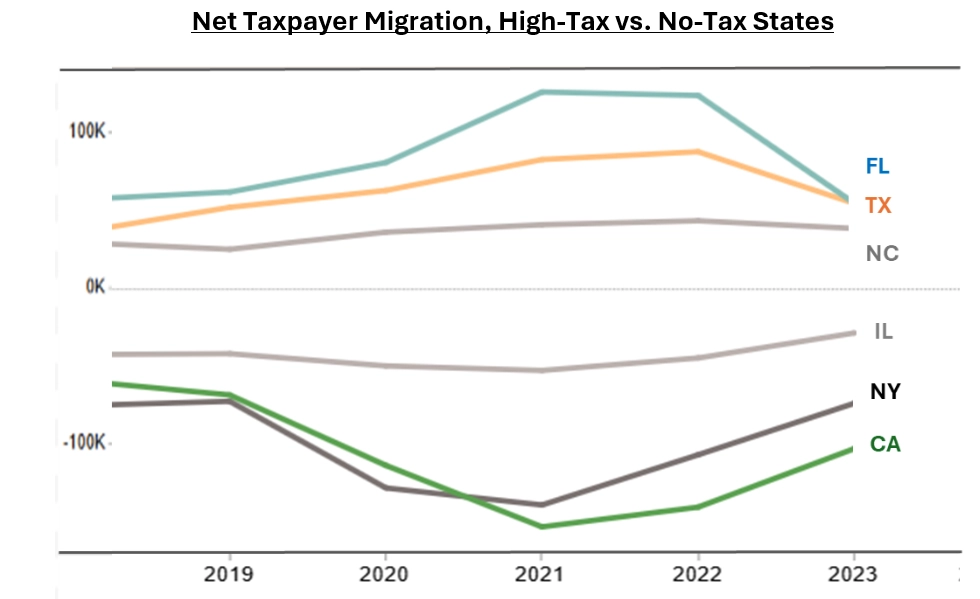
Figure 1: Comparison of Net Taxpayer Migration for Top No-Tax and High-Tax States, All Ages. Source: Pioneer Institute US DataLabs
In general, there is a two-fold effect on high-tax and no-tax states when it comes to migration effects. To start, no-tax states tend to have a positive inflow of earners while high-tax states experience an outflow of earners (see Figure 1). To deepen this effect, no-tax states tend to gain earners with larger incomes than the ones they lose, while high-tax states tend to gain earners with lower incomes. In Florida, inbound migrants’ average annual gross income (AGI) in 2023 was $124,039, while the average AGI of their outbound counterparts was $77,985, according to Pioneer Institute’s US DataLabs platform. States attracting wealthier residents than they lose is a “sign of economic strength,” according to America’s Dashboard. Florida has largely benefitted from this migration trend in recent years, but the pattern may be faltering for Florida and other states that follow the same model due to rising housing costs and affordability concerns.
While Florida experienced a massive boom during the pandemic, recent estimates show that net domestic migration dropped almost 93% in the past three years and has remained at low levels since. These departures are directly related to the lack of affordable housing supply and the rise in weather-related risk that drove up home prices and insurance premiums in coastal counties like Pinellas and Miami-Dade, leaving Florida with a deficit of approximately 55,000 single family homes and 66,000 rental units. The inability to meet demand and the arrival of high-wage earners created a compounding effect that made life unaffordable for the average Florida resident.
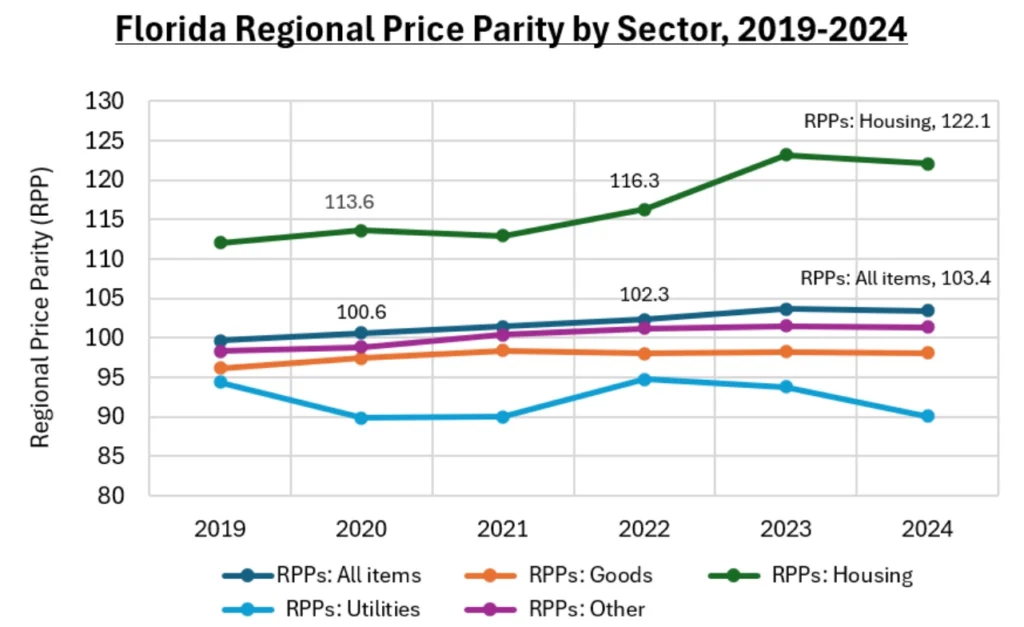
Figure 2: Florida Regional Price Parity by Sector, 2019-2024. Source: Pioneer Institute’s US DataLabs
Florida had led the United States in population growth over the past decade until it lost a major growth driver in immigration under the Trump administration. While Florida has a large swath of earners above $200,000, it is important to note that Orlando, Miami, and Tampa have some of the lowest median household incomes among the country’s 25 largest metro areas. To put costs in relative terms, the regional price parity for Florida housing in 2020 was 13.6% higher than the national average. In 2023, it peaked at 23.1% above the national average. The housing crisis in Florida is exemplified by the rise in its RPP in the past four years, especially when other price categories remained fairly constant.
Housing affordability affects all residents, but the makeup of the Florida economic landscape has uniquely affected young working-age adults and pushed them to states like North Carolina and Tennessee. Florida’s collapse in domestic migration threatens the state’s economy because of its dependence on the housing and retail sectors for economic support. These same workers are important “to filling jobs and stoking demand” for the service economy that Florida thrives on. While older, wealthier Floridians offset these losses for some time, the drop in working aged adults could create problems down the line as migration continues to slow. In Figure 3 below, notice the severe decrease in net migration for young working age adults in Florida between 2022 and 2023, the steepest drop, at 89.2%, being among those under 26.
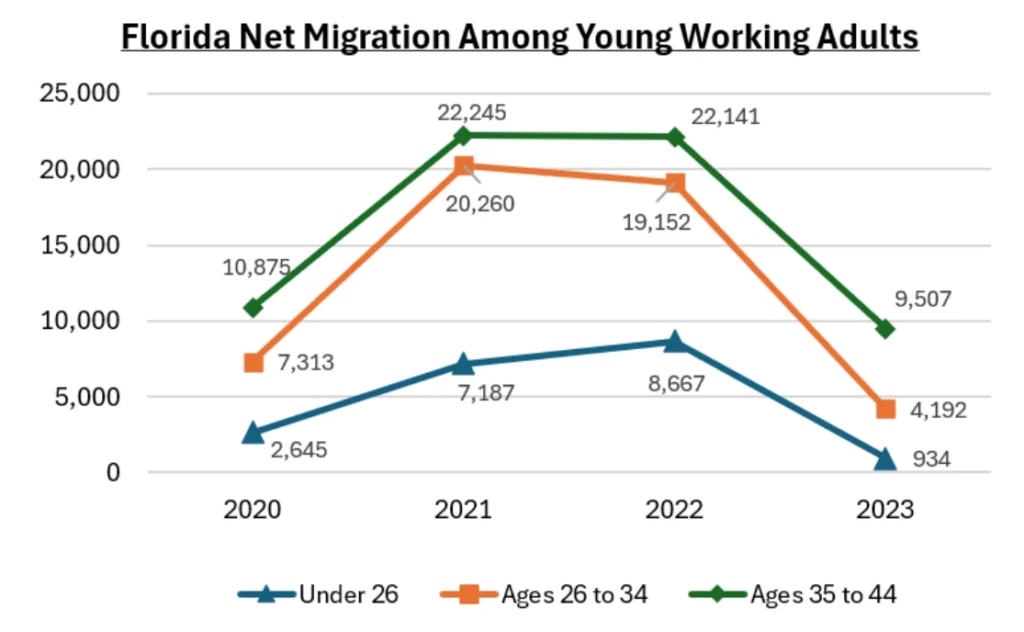
Figure 3: Net Migration of Young Working-Age Floridians, 2020-2023
Young workers are the feeders for the overall workforce. Florida could attract more young entry level workers through job opportunities and affordable housing. If the Sunshine State hopes to avoid the downstream effects of low domestic and international migration levels, making it more attainable for young families to live here may be its best bet.
Mia Raineri is a Roger Perry Government Transparency Intern at Pioneer Institute. She recently earned her M.S. in Applied Economics from Boston College.
Related Publications