Data show the requirements increase rents, reduce housing development
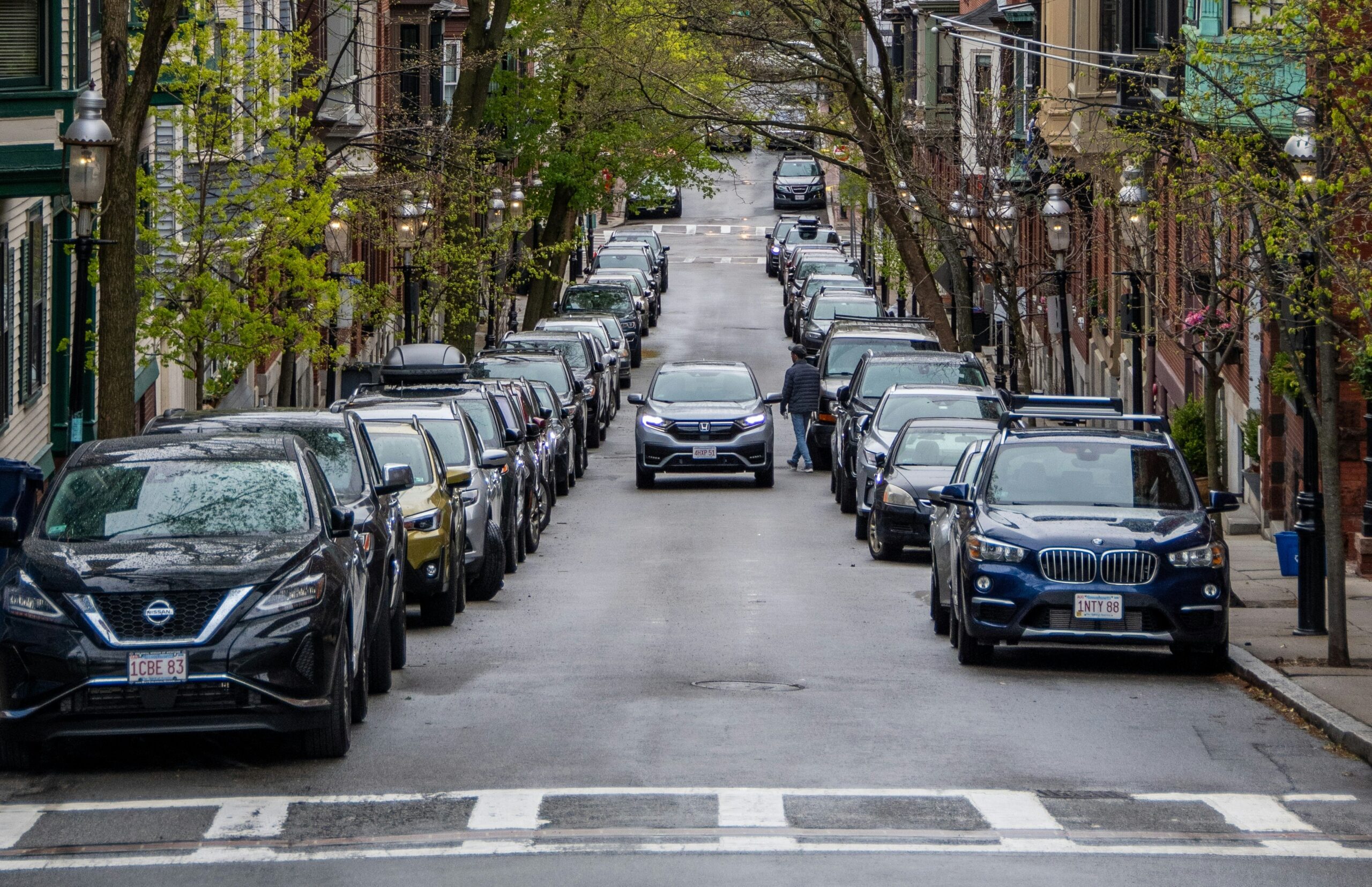
BOSTON – Local zoning codes often require more off-street parking than is needed, thereby raising the cost and reducing the pace of developing new housing. Municipalities that have reduced or eliminated parking requirements have seen considerable new housing development that would previously have been either illegal or prohibitively expensive to build, according to a new study published by Pioneer Institute.
Just requiring one parking space per unit instead of two in a mid-market rental building in Boston could cut construction costs by up to 17 percent and justify the provision of an additional income-restricted unit at 80 percent of area median income for every 10 market-rate units.
“Many housing developments in Massachusetts have a quarter or more of their parking spaces vacant overnight, and projects that aren’t subject to local zoning often provide much less parking than would otherwise be required,” said Andrew Mikula, author of The Parking Problem: How Reducing Off-Street Requirements and Improving On-Street Management Could Rein in Massachusetts’ Housing Costs and Accelerate Economic Development. “Relaxing or removing parking mandates could better align parking supply with demand.”
Current parking rules vary widely across Massachusetts. Only Cambridge and Somervile have explicitly eliminated off-street parking requirements, while many communities typically require two spaces per unit in new multifamily development. According to 2020-2024 five-year American Community Survey data, in at least 20 Massachusetts communities with such requirements, most households don’t have access to two or more cars.
But a 2015 Metropolitan Area Planning Council (MAPC) study of multifamily properties in the immediate Boston area found that even developments with three spaces for every four units had parking utilization rates of just 74 percent.
According to Cumming Group, in the fourth quarter of 2025 an above-ground parking garage cost between $34,000 and $59,000 per parking space to build in Boston and construction costs for underground garages ranged from $106,000 to $152,000 per space – costs that developers typically pass on to tenants.
Consequently, a 2016 UCLA study found that the average cost of garage parking was equivalent to adding 17 percent to the rent paid by the typical household.
Parking requirements also reduce the number of new homes that are built. A 2024 Colorado study estimated that eliminating parking requirements would increase the number of “market feasible” housing development sites in urban areas by 41 percent.
A 2012 study of King County, Washington, which includes Seattle, found that multi-family buildings supplied 0.4 spaces per unit more than needed. After the city eliminated parking requirements that year, more than 35,000 new homes entered the pipeline over the next five years. By 2023, those new homes accounted for 9.4 percent of the city’s total housing stock.
“With the development pipeline drying up across the Commonwealth, cities and towns need to find ways to lower construction costs,” said Pioneer Executive Director Jim Stergios. “Parking reform is low-hanging fruit because so many new apartment buildings have a visible oversupply of it.”
Among Mikula’s recommendations are to distribute the costs of providing parking according to who is using it, in both private and public arrangements. Pricing metered parking at market rate, incentivizing landlords to unbundle parking costs from rent, and charging urban residents for on-street parking permits would all shift the cost burden away from those who don’t own cars, who are disproportionately low-income.
###
Andrew Mikula is a Senior Fellow in Housing at Pioneer Institute. Beyond housing, Andrew’s research areas of interest include urban planning, economic development, and regulatory reform. He holds a Master’s Degree in Urban Planning from the Harvard Graduate School of Design.