BOSTON – Measurable targets for increasing ridership would be an effective organizing principle as the MBTA develops its strategic plan, according to a new study published by Pioneer Institute.
“Increasing ridership aligns well with many of the MBTA’s subsidiary goals,” said Pioneer Institute Research Director and former Massachusetts Inspector General Greg Sullivan, the author of “Aim High on MBTA Ridership: A big-picture take on the T’s strategic plan.” “The additional revenue from more riders would help to improve the T’s finances.”
Sullivan looked at ridership trends on six MBTA modes – bus, commuter rail, ferry, heavy rail (the Blue, Orange and Red Lines), light rail (Green Line), and trolley bus service between fiscal years 2003 and 2016.
He found that commuter rail and trolley ridership declined over that time, while the other modes saw increases, though only a 2016 spike put light rail into the positive territory. Bus ridership saw the most fluctuation, while heavy rail had the largest overall increase.
Using data from an analysis performed by the Central Transportation Planning Staff of the Boston Metropolitan Planning Organization, Sullivan estimates the additional revenue that could be generated by various degrees of increased ridership. The scenarios range from an annual jump of more than $68 million from increasing ridership across the board to 110 percent of 2016 levels, to more than $250 million in potential additional revenue if the MBTA can increase ridership on each mode to 120 percent of the year in which the agency had the most trips between 2003 and 2016 (FY2014).
“The Control Board’s tenure has been marked by hard work, real accomplishments, and seriousness of purpose in moving the T toward a balanced budget and a state of good repair,” said Jim Stergios, executive director of Pioneer Institute. “There clearly is much more work to do, including the development of a strategic plan that defines the authority’s vision and priorities for public transit in the Greater Boston area. Pioneer believes that prioritizing an expansion in ridership also helps the T address many of its significant challenges.”

The advantages from increasing ridership wouldn’t only be financial or benefit the T exclusively. It would also help to reduce road congestion, putting less strain on Greater Boston roadways and generating positive environmental benefits. A 2015 Texas A&M study found that congestion costs Boston $3.3 billion annually and $1,388 per commuter.
There are operational changes that would facilitate MBTA ridership increases. For example, modernizing signal systems could reduce headways enough to more than double Red Line capacity, assuming an adequate number of vehicles were available.
Another way the MBTA could boost ridership would be to promote commuter benefit plans, under which employers provide their employees with free or discounted transit passes. The T already gets more than a quarter of its fare revenues from corporate pass programs, which studies show are particularly effective and attracting riders who are new to transit. The data suggest there is an opportunity to significantly expand these programs through a variety of unique initiatives.
The MBTA could also target promotional materials to employees and work collaboratively with payroll vendors to distribute the materials.
About the Author: Gregory W. Sullivan is Pioneer’s Research Director, and oversees the Centers for Better Government and Economic Opportunity. Prior to joining Pioneer, Sullivan served two five-year terms as Inspector General of the Commonwealth of Massachusetts, where he directed many significant cases, including a forensic audit that uncovered substantial health care over-billing, a study that identified irregularities in the charter school program approval process, and a review that identified systemic inefficiencies in the state public construction bidding system. Prior to serving as Inspector General, Greg held several positions within the state Office of Inspector General, and was a 17-year member of the Massachusetts House of Representatives. Greg is a Certified Fraud Investigator, and holds degrees from Harvard College, The Kennedy School of Public Administration, and the Sloan School at MIT.
###
Pioneer Institute is an independent, non-partisan, privately funded research organization that seeks to improve the quality of life in Massachusetts through civic discourse and intellectually rigorous, data-driven public policy solutions based on free market principles, individual liberty and responsibility, and the ideal of effective, limited and accountable government.
Oops! We could not locate your form.

Shaka Mitchell on the American Federation for Children & School Choice Options

We Have a Long Way to Go for Massachusetts Residents to Have the Government Transparency We Deserve

Study Finds Pension Obligation Bonds Could Worsen T Retirement Fund’s Financial Woes
Study Documents The Design Challenges, Contracting Issues, And Delays Facing New MBTA Fare Collection System
Study Finds Bus Rapid Transit Can Offer Cost-Effective Benefits
Study Raises Concern That Annual T Fare Evasion Costs Could Rise By More Than $30 Million Under AFC 2.0
Pioneer Applauds MassDOT for Allston Project All At-Grade Plan
Open Letter: Extend the Term of the MBTA’s Fiscal and Management Control Board

Pioneer Institute Statement on MBTA Service Cuts
COVID-19 Silver Lining: MBTA Takes Advantage of Ridership Lull to Accelerate $8.5 Billion Modernization Program

Survey Suggests Demand for Telecommuting After COVID-19 Crisis
Study Highlights Transit Agency Best Practices in Response to COVID-19

A Control Board Equipped for the Next Phase of MBTA Reform
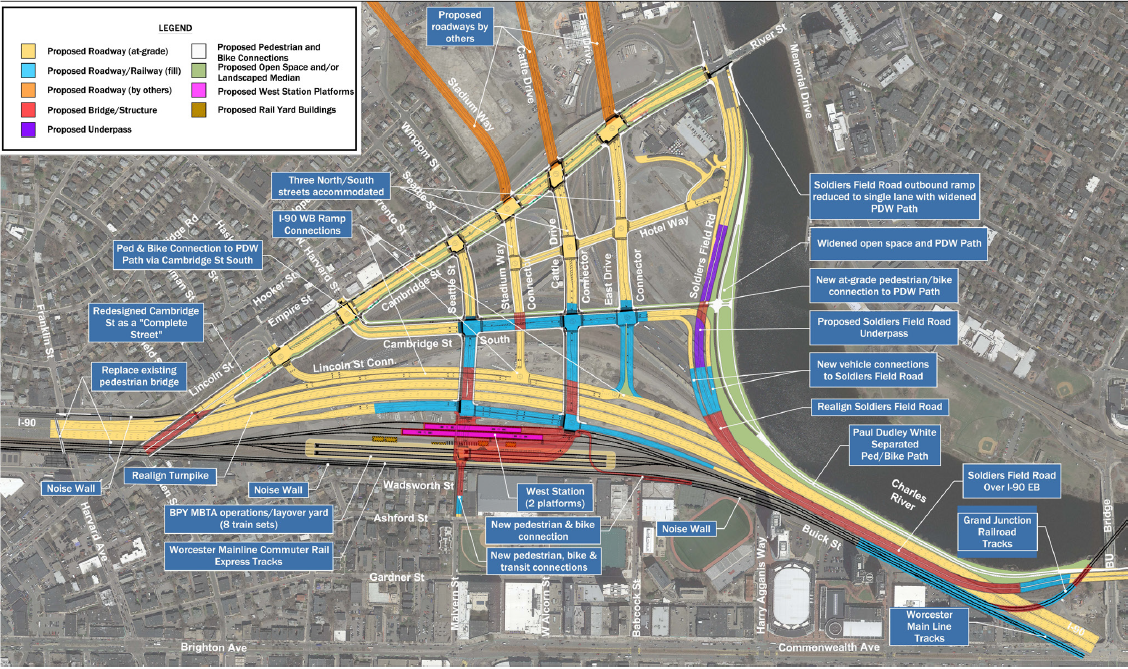
Pioneer Urges MassDOT to Reconsider At-Grade Throat Option for I-90 Allston Multimodal Project

Study Finds Revived Merit Rating Board Taking Steps to Carry Out Statutorily Mandated Duties

Study Proposes “Marshall Plan” for Attracting and Retaining Talent Needed to Modernize the MBTA

Pioneer Institute Announces Winner of 29th Annual Better Government Competition
Study Calls for Easing MBTA Procurement Restrictions and Beefing Up Project Management Capacity

Pioneer Institute Public Statement: A Season for Management Reforms

Whistleblowers Were Proven Right: MBTARF Was Underreporting Its Unfunded Pension Liabilities

Pioneer Institute Public Statement on the MBTA’s Proposal to Increase Fares by 6.3 Percent

Review of MBTA Twitter Alerts Finds Fewer “Delayed” Trains, Corresponding Increase in Those “Running Behind”
Public Statement on MBTA Ridership & Pension Costs

The Future of Transportation in the Commonwealth

New Study Urges MBTA to Expand Corporate Pass Program
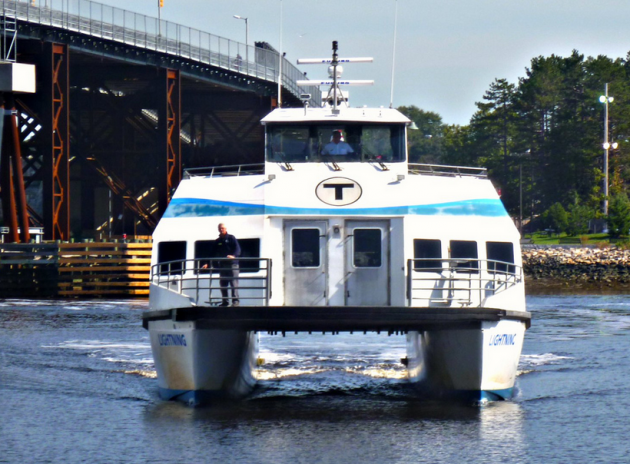
Study: Ferry Service Could Provide Opportunity for MBTA Expansion without Huge Upfront Costs
Public Statement: Pioneer Applauds MBTA Control Board For Seeking To Modernize Bus Maintenance

Report Calls on FMCB to Seek Legislative Intervention on Projected 18-Year, $1.485 Billion T Pension Shortfall
Study: Evidence Suggests MBTA Pension Low-Balled Costs And Liabilities
Putting The T On A Clear Path To High Performance
Study Finds MBTA Had Nation’s Highest Bus Maintenance Costs In 2015

Public Statement on Nonrenewal of Keolis Commuter Rail Contract